
Type & Discipline
Clinical hypnosis is a treatment procedure, not a diagnosis, and it sits within psychology and psychiatry as an adjunctive modality applied across mental and somatic health problems 3. The American Psychological Association’s Division 30 defines hypnosis as a state of consciousness involving focused attention and reduced peripheral awareness, characterized by an enhanced capacity for response to suggestion 1. Within that frame, hypnotherapy refers to the clinical use of this procedure by a trained professional to help a client change perception, sensation, emotion, thought, or behavior 6. The discipline treats hypnosis as a tool that augments an existing therapeutic approach rather than as a freestanding school of therapy in the way cognitive behavioral therapy or psychodynamic therapy are 7. Its family is best described as the trance- and suggestion-based therapies, in which the deliberate cultivation of absorption and responsiveness to suggestion is the active ingredient 1.
Creators & Lineage
The modern professionalization of clinical hypnosis is inseparable from Milton Erickson, a psychiatrist whose permissive, indirect, and individualized use of suggestion reshaped the field and seeded the Ericksonian tradition 6. Erickson’s influence helped move hypnosis away from authoritarian command toward tailored, conversational induction that meets the client’s own language and frame of reference 6. The organizational lineage in the United States runs through two bodies that continue to define standards: the American Society of Clinical Hypnosis, which Erickson helped found and which trains licensed health professionals in clinical application, and the Society for Clinical and Experimental Hypnosis, which bridges practice and research 45. The scientific lineage is anchored by the American Psychological Association’s Division 30, the Society of Psychological Hypnosis, which issues the field’s consensus definitions and convenes its psychological scholarship 1.
Clinical hypnosis also borrows from and lends to several therapeutic traditions LLM. It overlaps substantially with cognitive behavioral therapy, where hypnosis is frequently combined with cognitive and behavioral methods to amplify their effect 3. It shares historical roots with psychodynamic therapy, given hypnosis’s role in the early history of psychoanalysis, and it converges conceptually with mindfulness and relaxation-based approaches that likewise harness focused attention and shifts in awareness 17. The contemporary field positions itself as an evidence-based practice, integrating research, clinical expertise, and patient characteristics rather than relying on tradition alone 7.
Core Principles
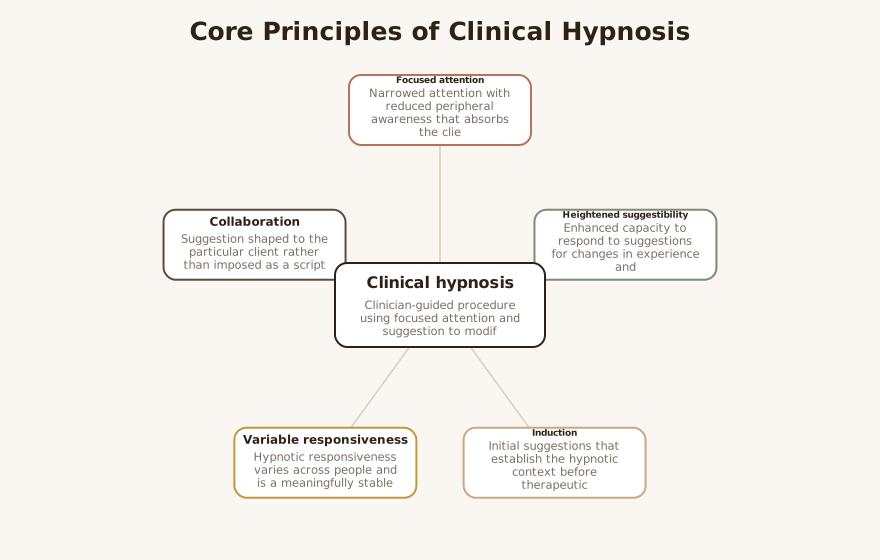
The first principle is focused attention with reduced peripheral awareness: the hypnotic state narrows the field of attention and absorbs the client, which is held to be what makes suggestion more effective 1. The second is heightened suggestibility, the enhanced capacity to respond to suggestions for changes in experience and behavior, which the Division 30 definition places at the center of what hypnosis is 1. The third is induction, a procedure used to establish the hypnotic context, typically a set of initial suggestions that invite absorption and relaxation, followed by the therapeutic suggestions that target the presenting problem 1.
A fourth principle is that hypnotic responsiveness varies across people and is, to a meaningful degree, a stable individual trait, so clients differ in how much they benefit from hypnotic procedures 1. A fifth, particularly emphasized in the Ericksonian lineage, is collaboration and individualization: suggestion is shaped to the particular client rather than imposed as a script 6. Underlying all of this is the principle that hypnosis is an adjunct that modifies the delivery of treatment, so it is layered onto an established intervention rather than used as a standalone cure 7. The field also insists, as a matter of definition, that the person being hypnotized retains agency and is not under the control of the clinician, correcting the stage-show caricature 6.
Interventions & Techniques
A clinical hypnosis session generally moves through induction, deepening, therapeutic suggestion, and re-alerting, and the specific suggestions are matched to the target symptom 17. For pain, common techniques include suggestions for analgesia, numbing, dissociation from the painful area, or reinterpretation of the sensation, which alter the perception of pain rather than its peripheral source 3. For anxiety and stress, suggestions for calm, safety, and physiological down-regulation are paired with imagery, often resembling and reinforcing relaxation-based methods 7. For habit disorders such as smoking, suggestions reframe the urge and strengthen the client’s commitment and self-image as a non-smoker 6.
Two features distinguish technique in this modality LLM. First, hypnosis is frequently delivered as an additive component to another treatment, so a clinician may embed hypnotic suggestion within a cognitive behavioral protocol to magnify its effect 3. Second, self-hypnosis is routinely taught, transferring the procedure to the client for between-session practice and giving them a portable skill for symptom management 7. The Ericksonian approach contributes indirect suggestion, metaphor, and utilization of the client’s own associations, which can engage clients who resist direct command 6.
LLM-generated illustrative example (not a guideline): A clinician treating a client with needle phobia first establishes a relaxed, absorbed state through a brief induction, then offers suggestions that the client’s arm can feel cool, distant, and “not quite theirs” during the blood draw, and finally teaches a two-minute self-hypnosis cue the client can use independently in the waiting room before the next appointment LLM.
Evidence Base
The honest appraisal is that clinical hypnosis is an established, mainstream adjunctive modality with a substantial and maturing evidence base, not a fringe practice and not a panacea 3. A 20-year meta-analytic perspective synthesizing trials across mental and somatic health concluded that hypnosis produces clinically meaningful benefits for a range of conditions, with particularly robust support when it is used as an adjunct to other treatments 3. The evidence is strongest and most consistent for pain, including chronic and acute or procedural pain, and is supportive for anxiety, irritable bowel syndrome and other functional somatic symptoms, and procedure-related distress 3. The field’s professional bodies frame hypnosis explicitly as an evidence-based practice, integrating the best available research with clinical expertise and patient characteristics 7.
At the same time, the literature is candid about limits and unresolved questions LLM. Effect sizes vary by condition and by the quality of trials, and benefit is most reliable when hypnosis augments an established intervention rather than replacing it 3. There is also genuine, ongoing controversy about the very definition of hypnosis: Lynn and colleagues argued that the Division 30 definition was a step backward, criticizing it for ambiguity and for not adequately grounding the construct in science, which signals that the field’s foundational concepts remain contested even as its clinical outcomes accumulate support 2. A defensible clinical stance is therefore to use hypnosis as an empirically supported adjunct for the conditions where trials are strongest, while remaining honest that the underlying mechanism and even the definition are still debated 23.
Populations & Indications
The clearest indication is patients with chronic pain, for whom hypnotic analgesia and reinterpretation techniques have the strongest meta-analytic support 3. Patients undergoing medical or surgical procedures are a closely related population, where hypnosis is used to reduce acute and procedural pain, anxiety, and distress around interventions 3. Individuals with anxiety disorders, phobias, and stress-related symptoms are indicated, given evidence for hypnosis in reducing anxiety and its natural fit with relaxation and exposure-style work 37. People with somatic and functional disorders, particularly irritable bowel syndrome and related functional somatic symptoms, are a well-supported group in the synthesized literature 3.
Individuals with habit disorders, such as smoking, are a traditional and frequently treated population, with suggestion used to reframe urges and reinforce change 6. Trauma survivors and patients with insomnia or treatment-related nausea are further populations addressed by hypnotic methods, with the caveat that trauma work warrants particular care 6. Across all of these groups, hypnotic responsiveness varies between individuals, so the procedure is better suited to clients who show reasonable capacity for absorption and response to suggestion 1.
Problems-for-Work
The problems most squarely addressed by clinical hypnosis cluster around perception, arousal, and habit LLM. Chronic pain and acute or procedural pain are the central problems-for-work, targeted through analgesic and dissociative suggestion that changes how pain is perceived 3. Anxiety disorders, phobias, and stress-related symptoms are addressed by cultivating a calm, absorbed state and pairing it with suggestion and imagery, frequently within a broader cognitive behavioral or relaxation framework 37. Irritable bowel syndrome and functional somatic symptoms are worked through gut-directed and symptom-focused suggestion that modifies symptom experience and distress 3.
Smoking cessation and other habit disorders are addressed by reframing the urge and strengthening a new self-image and commitment 6. Insomnia, nausea, and PTSD and dissociation round out the typical targets, with hypnosis used to promote sleep onset, reduce treatment-related nausea, and, with caution, support trauma-focused work 6.
LLM-generated illustrative example (not a guideline): A client with irritable bowel syndrome and high health anxiety learns gut-directed hypnotic suggestions framed around warmth, smooth flow, and a calmer “settled” abdomen, practices them as self-hypnosis daily, and over several weeks reports both reduced symptom intensity and less catastrophic interpretation of normal gut sensations LLM.
Contraindications, Cautions & Cultural Humility
The foremost caution is competence and scope: hypnosis should be practiced only by appropriately trained, licensed health professionals using it within the bounds of their existing clinical license and discipline, not as a parlor technique 4. Trauma and dissociation require particular care, because suggestive procedures can interact with memory and dissociative processes, and clinicians should be alert to the risk of inadvertently shaping or amplifying inaccurate recollection rather than treating presenting symptoms 6. Because hypnotic responsiveness varies, hypnosis should not be presented as universally effective, and a poor response is an individual-difference finding rather than client failure 1.
Hypnosis is an adjunct, so using it in place of indicated medical or psychological care, or implying it will resolve serious conditions on its own, overreaches the evidence 7. Clinicians should also be transparent that the client retains control throughout and that the dramatic, controlling image of hypnosis is a misconception, which protects informed consent 6. Cultural humility matters because beliefs about trance, suggestion, altered states, and the body differ across cultures, and some clients may carry meaningful religious or cultural associations with such states; the procedure, its language, and its imagery should be discussed and adapted to the client’s frame rather than imposed LLM. The honesty the field shows about its own contested definition should extend to the consulting room, where the clinician presents hypnosis as a supported but bounded tool 2.
Treatment-Plan Suggestions & SMART Objectives
| Goal | SMART objective (example) | Mechanism |
|---|---|---|
| Reduce chronic pain intensity and interference | Over 8 weekly sessions, client will reduce average daily pain rating by 2 points on a 0–10 scale and increase one valued activity, logged daily | Hypnotic analgesia and reinterpretation alter pain perception 3 |
| Lower procedural anxiety and pain | Before the next scheduled procedure, client will use a rehearsed self-hypnosis routine and report a 50% drop in pre-procedure distress | Absorption plus suggestion reduces acute and procedural distress 3 |
| Decrease generalized anxiety and arousal | Within 6 sessions, client will enter a calm hypnotic state independently and apply it twice daily, with weekly anxiety-scale scores trending down | Focused attention and suggestion down-regulate arousal 37 |
| Improve IBS symptom experience | Over 10 sessions of gut-directed suggestion, client will report a 30% reduction in symptom-related distress and fewer catastrophic interpretations | Symptom-focused suggestion modifies functional symptom experience 3 |
| Support smoking cessation | Within 4 sessions, client will identify 3 urge triggers and apply a hypnotic reframe and a non-smoker self-image at each, with logged abstinence days increasing | Suggestion reframes urges and strengthens new self-image 6 |
| Build a portable self-regulation skill | By session 5, client will demonstrate competent self-hypnosis and use it for symptom management at least 5 times weekly | Self-hypnosis transfers the procedure for between-session use 7 |
| Improve sleep onset | Over 6 weeks, client will apply a sleep-onset hypnotic routine nightly and reduce average time-to-sleep by 15 minutes per sleep diary | Suggestion and relaxation promote sleep onset 6 |
Common Misconceptions
A pervasive misconception is that hypnosis places the client under the clinician’s control or makes them act against their will; in fact the hypnotized person retains agency, and the controlling, stage-show image is inaccurate 6. A second is that hypnosis is a single, freestanding therapy that cures conditions on its own, when it is most accurately understood and most strongly supported as an adjunct that augments other treatments 37. A third is that everyone responds to hypnosis equally, whereas hypnotic responsiveness varies meaningfully across individuals and is partly a stable trait 1.
A fourth misconception is that hypnosis reliably recovers accurate buried memories; the suggestive nature of the procedure means it can shape recollection, which is precisely why trauma applications demand caution 6. A fifth, more technical misconception is that the field has settled exactly what hypnosis is; the published critique of the Division 30 definition shows that even hypnosis experts continue to debate the construct’s boundaries and scientific grounding 2. Distinguishing the well-supported clinical claims from the contested theoretical ones is part of using the modality responsibly 23.
Training & Certification
Clinical hypnosis is not a license in itself; it is a procedure used by already-licensed health professionals within their own scope of practice 4. Training is delivered through recognized professional bodies, principally the American Society of Clinical Hypnosis, which offers structured workshops and certification pathways for qualified clinicians, and the Society for Clinical and Experimental Hypnosis, which links training to the experimental literature 45. The American Psychological Association’s Division 30 anchors the psychological and scientific side of the field and publishes its consensus definitions and scholarship 1.
Responsible training emphasizes evidence-based practice, integrating research, clinical expertise, and patient characteristics rather than technique alone 7. Generalist clinicians can legitimately add hypnosis to their toolkit through such training, provided they apply it only to problems within their competence and refer where the presenting issue exceeds their discipline 4. Clinicians should be careful to obtain training from credentialed professional organizations rather than from lay or entertainment-oriented sources, given how easily the procedure is caricatured and misused 6.
Key Terms
Hypnosis — a state of consciousness involving focused attention and reduced peripheral awareness, marked by an enhanced capacity to respond to suggestion, per the APA Division 30 definition 1. Hypnotherapy — the clinical application of hypnosis by a trained professional to change perception, emotion, thought, or behavior 6. Induction — the procedure, typically a set of initial suggestions, used to establish the hypnotic context before therapeutic suggestion 1. Suggestion — a communication, direct or indirect, inviting a change in experience or behavior, the active ingredient amplified by the hypnotic state 1. Hypnotic responsiveness (suggestibility) — the individual’s capacity to respond to hypnotic suggestion, which varies across people and is partly stable 1. Self-hypnosis — a hypnotic procedure carried out by the client themselves, taught for between-session symptom management 7. Hypnotic analgesia — suggestion-based reduction or reinterpretation of pain perception, the best-supported clinical application 3. Adjunctive use — delivery of hypnosis as an added component to another established treatment, the form with the strongest evidence 3. Ericksonian approach — the permissive, indirect, individualized tradition of suggestion associated with Milton Erickson 6.
Resources & Further Reading
▶ Watch — a video introduction to this concept:
- APA Division 30 (Society of Psychological Hypnosis) — About / definition of hypnosis
- The ‘New’ APA Division 30 Definition of Hypnosis as a Failure of Acceptance (Lynn et al., 2015)
- Meta-analytic evidence on the efficacy of hypnosis for mental and somatic health issues: a 20-year perspective (PMC)
- American Society of Clinical Hypnosis (ASCH)
- Society for Clinical and Experimental Hypnosis (SCEH)
- Hypnotherapy — Psychology Today
- Evidence-Based Practice in Clinical Hypnosis (APA book, sample pages)
Reflective / Supervision Questions
- When I propose hypnosis to a client, am I framing it honestly as a supported adjunct for their specific problem, or am I implying a more dramatic or curative power than the evidence supports 3?
- How do I assess and discuss a client’s hypnotic responsiveness so that a limited response is understood as normal individual variation rather than failure 1?
- With trauma survivors, what safeguards do I have in place so that suggestive procedures do not inadvertently shape memory or amplify dissociation 6?
- Am I working within my training and scope, having obtained instruction from a credentialed professional body, and do I refer when the presenting problem exceeds my competence 4?
- How do I attend to a client’s cultural, religious, or personal associations with trance and altered states, adapting the language and imagery of induction to their frame rather than my own LLM?
- Can I hold the field’s honest tension — strong clinical outcomes alongside a still-contested definition — and communicate that nuance to clients and supervisees 2?